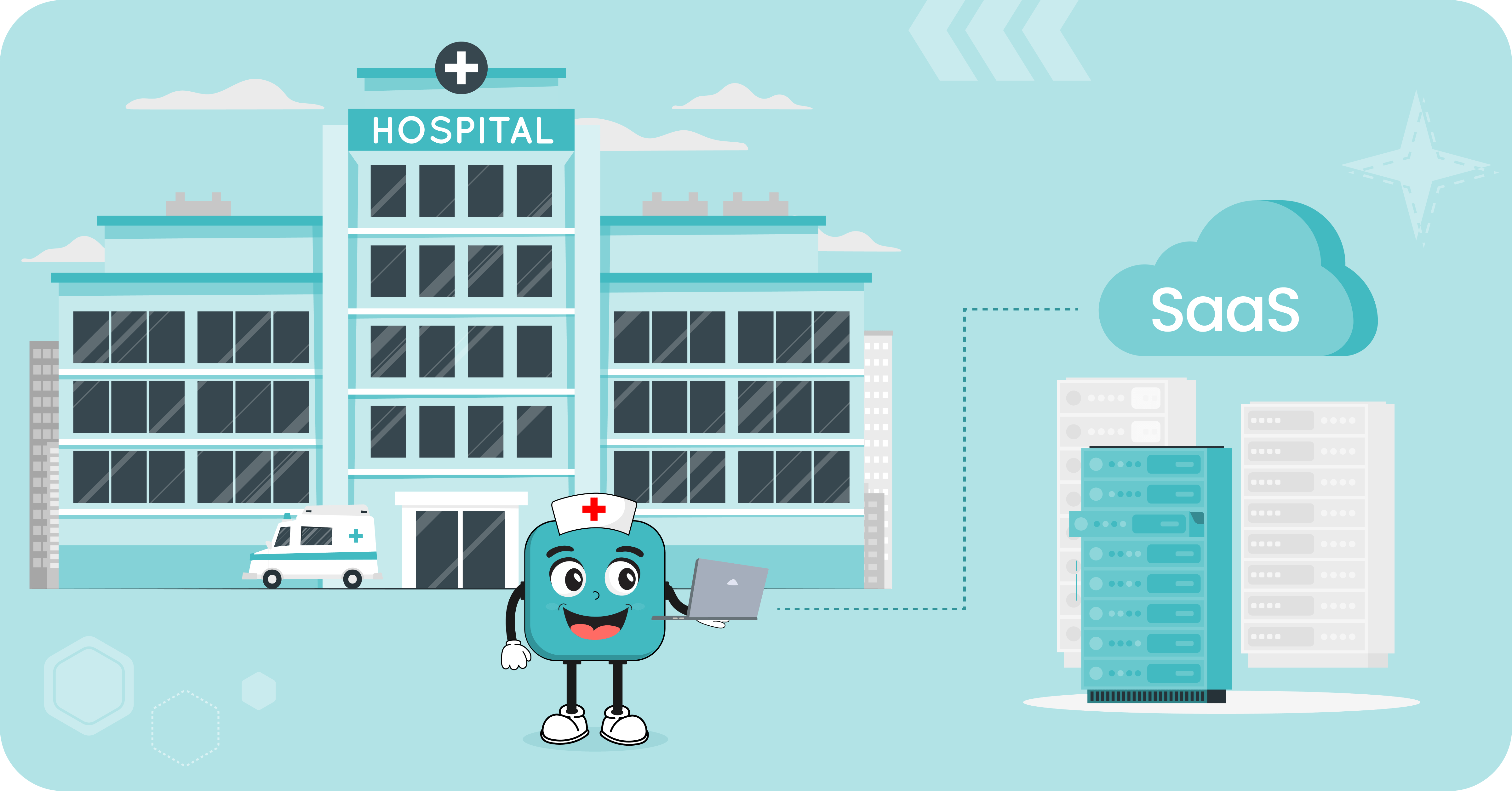
In 2024, technological evolution is a key topic across all sectors, including healthcare. One major component of this transformation is Software as a Service (SaaS). This article explores the importance and benefits of SaaS solutions in the healthcare sector.
What is SaaS (Software as a Service)?
SaaS (Software as a Service) is a software distribution model based on the cloud (remote access). Solutions are no longer installed on clients’ machines or on-premise servers, but are accessed via the internet. Emerging in the 1990s, the SaaS market has experienced exponential growth. By 2025, it is estimated that 85% of professional software solutions will be delivered using this model.
SaaS in Healthcare
This model offers several advantages for the healthcare sector :
Accessibility and mobility
SaaS solutions are accessible from any internet-connected device, enabling healthcare professionals to access and manage patient information anytime and anywhere.
Automatic updates and maintenance
SaaS providers deliver regular updates and maintenance, ensuring that users always benefit from the latest features and security enhancements without service interruptions.
Security and compliance
Les entreprises de cette solution cloud agréées spécialisées dans le secteur de la santé mettent en œuvre des mesures de sécurité robustes pour protéger les données sensibles des patients. Elles veillent également à la conformité avec les régulations telles que le RGPD (Règlement Général sur la Protection des Données en Europe).
Scalability
SaaS solutions are scalable, enabling healthcare institutions to easily adjust their capacity based on demand.
SaaS challenges in the healthcare sector
SaaS approaches may introduce risks and challenges that must be carefully assessed within your specific context of use in order to fully benefit from their advantages.
Regulatory compliance
GDPR (General Data Protection Regulation):
All SaaS providers must comply with GDPR requirements to ensure comprehensive protection of personal data throughout its collection, storage, and processing.
Kheops: Kheops SaaS solutions comply with both GDPR and the Swiss Data Protection Act (DPA), ensuring full protection of personal data.
HDS (Health Data Hosting):
Providers must be HDS-certified to host health data, which entails strict security and confidentiality standards.
Kheops: Kheops solutions are hosted in HDS-certified environments.
Audits and controls:
SaaS providers must be prepared to undergo regular audits to ensure compliance with all regulatory and security requirements.
Kheops: At Kheops, we regularly commission audits and penetration tests conducted by recognized external firms to guarantee that best practices and robust measures are in place—reinforcing regulatory compliance, security, and the quality of our SaaS solutions.
Data security
Security measures:
SaaS applications must incorporate robust security measures, such as data encryption both in transit and at rest, multi-factor authentication, and continuous threat monitoring. SaaS providers must place cybersecurity at the core of their priorities.
Kheops:
We invest heavily in cybersecurity to protect sensitive data and have a dedicated data security team. At Kheops, numerous security measures are implemented, and security has truly become part of our company culture.
For example, our personal devices are protected by physical security keys, and internal networks are secured through multiple layered mechanisms, including VPNs. We use encrypted environments and highly secure data exchange solutions. At Kheops, no one manages their credentials or passwords locally on their machines; instead, we rely on digital vaults, multi-factor authentication, and/or single sign-on (SSO). Finally, we apply internally all the security recommendations we make to our clients. We also test solutions internally, which makes us particularly well equipped to support our clients in these complex and critical areas.
Interoperability
Integration with existing systems:
SaaS solutions must be able to integrate seamlessly with existing hospital information systems (HIS), electronic medical records (EMR), and other software used in the healthcare sector.
Kheops: Interoperability is a core focus at Kheops. Its SaaS solutions (ClevEHR SaaS and KLS SaaS) integrate seamlessly with existing hospital systems (HIS, EMR, etc.).
Data standards:
SaaS solutions must comply with data standards such as HL7 and FHIR to ensure interoperability between different systems and applications.
Kheops: Kheops solutions are compliant with HL7 and FHIR standards.
Reliability and availability
Uptime and availability:
Providers must ensure high availability and flawless reliability to guarantee uninterrupted service delivery.
Kheops: Kheops solutions provide high availability and very high reliability. Our service level commitments are among the most demanding on the market, supported by monitoring environments that continuously track (24/7) several hundred technical and business parameters.
Business continuity and disaster recovery:
Providers must have robust business continuity and disaster recovery plans (BCP/DRP) to ensure services remain available even in the event of a major outage.
Kheops: We implement business continuity and disaster recovery plans for environments classified as critical. We have demonstrated full recovery times of less than 4 hours, including data center relocation, and complete rebuild times (including major interoperability components) in under 12 hours—representing a significant technical achievement.
Our environments are entirely built using a DevOps approach, with automated deployments, including infrastructure provisioning (Terraforming). Operators never intervene directly on machines or applications; all actions are performed through scripts. After four years of substantial investment, our infrastructure is now fully based on Infrastructure as Code (IaC).
Examples of SaaS applications in the healthcare sector
Electronic Medical Record (EMR) management system
Context
A small healthcare facility is facing difficulties in efficiently managing patient medical records. The facility uses multiple medical record management systems, leading to compatibility, security, and data update issues. Physicians and healthcare staff spend a significant amount of time accessing and sharing records, which negatively impacts the quality of care.
Solution SaaS
The healthcare facility decides to migrate to a SaaS-based EMR management system. They choose a SaaS solution that centralizes all medical records in the cloud, accessible via a secure internet connection.
Kheops SaaS solutions
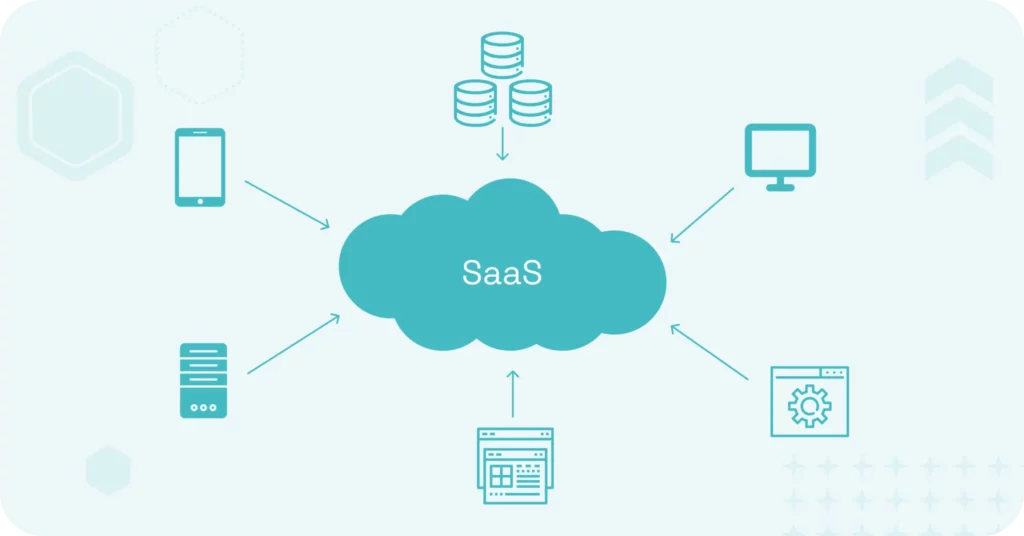
The software and data of Kheops SaaS solutions—ClevEHR SaaS and KLS SaaS—are hosted on replicated and secure servers located in Switzerland. You no longer need to worry about infrastructure management or maintenance.
Benefits for you
- Turnkey solution
We deliver a complete solution with no need for server installation or infrastructure maintenance. - Optimized infrastructure management
Your IT teams can focus on other critical tasks instead of spending time managing infrastructure. - No software installation
No local software installation is required. - Regular updates
Updates are performed on a recurring basis, ensuring you always benefit from the latest version. - No upfront investment
No initial infrastructure investment is required.
Security and maintenance measures
We implement rigorous technical and organizational measures to secure our SaaS solutions.
Continuous monitoring and maintenance
With Kheops SaaS solutions—ClevEHR SaaS and KLS SaaS—you benefit from optimized, secure, and simple management for your clinic, while allowing your teams to focus on what truly matters.
Conclusion
SaaS represents one of the many evolutions shaping the healthcare sector, offering significant benefits in terms of accessibility, security, and scalability. By adopting SaaS solutions, healthcare organizations can improve quality of care, optimize operations, and adapt rapidly to changes in the medical landscape. As technology continues to evolve, the role of SaaS in healthcare will only continue to grow, delivering ongoing innovation for the benefit of both patients and healthcare professionals.