
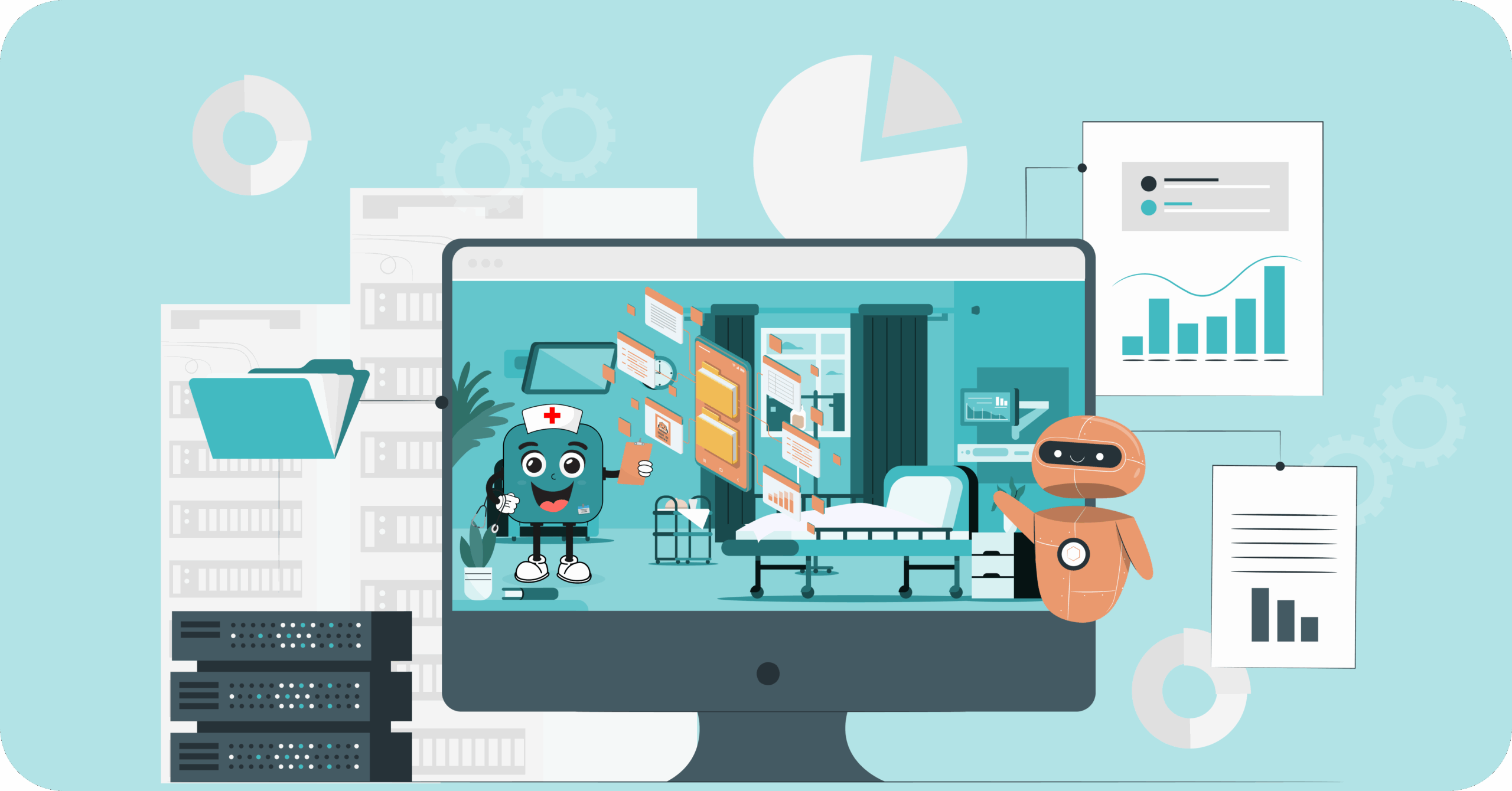
Artificial intelligence (AI) is reshaping the healthcare sector.
AI-assisted diagnosis, personalized medicine, prediction of chronic diseases, optimization of hospital flows, automation of time-consuming administrative tasks—its use cases are multiplying and becoming increasingly sophisticated. Together, they hold immense potential to improve quality of care, reduce costs, and relieve pressure on a healthcare system under strain.
However, while the promises are significant, turning them into reality depends on a fundamental prerequisite: the strength of the underlying digital infrastructure. Without a robust technical foundation, no AI strategy can be fully deployed or scaled effectively.
AI in healthcare: a transformation already underway
AI is no longer a matter of science fiction. It is already being applied across many medical fields, including radiology, dermatology, oncology, and cardiology. Increasingly powerful algorithms are now capable of interpreting medical images, detecting subtle signals within electronic health records, and supporting the remote monitoring of patients with chronic conditions.
For healthcare professionals, this means stronger support for diagnosis and clinical decision-making. For patients, it results in smoother, more personalized, and better-coordinated care pathways. For the healthcare system as a whole, AI offers a promising response to major challenges such as workforce shortages, population aging, and cost containment.
Yet this transformation cannot take place without a robust, interoperable, secure, and scalable infrastructure designed to evolve over time.
What are the main barriers that need to be addressed?
1. Data quality and accessibility
AI operates through learning. To be reliable, it requires large volumes of high-quality, structured, and representative medical data. Yet today, healthcare data is still too often scattered across heterogeneous systems, poorly standardized, or difficult to exploit. The transition to Electronic Health Records (EHRs) marked an important first step, but the challenge goes far beyond that: it requires clear data governance, from data capture through to analysis.
2. System interoperability
Technical silos are the enemy of AI. The lack of seamless communication between software systems, services, or healthcare institutions undermines continuity of care, prevents the correlation of critical information, and slows innovation. The adoption of shared data exchange standards (such as HL7, FHIR, etc.) and interoperable EHRs is a prerequisite for enabling intelligence to circulate where it delivers the most value.
3. Security and regulatory compliance
Processing sensitive data with intelligent algorithms raises critical issues related to cybersecurity, confidentiality, and legal compliance. AI in healthcare can only develop within a strict framework of trust that meets GDPR requirements, local regulations (e.g., the Swiss Data Protection Act), and healthcare authority standards. This requires full control over the entire data processing chain—from storage to usage.
4. Computing power and cloud infrastructure
Modern AI models require significant computing power—often in real time—as well as massive storage capacity. This calls for high-performance cloud infrastructures, while also carefully combining cloud solutions with edge computing (local or near-device processing). The challenge is twofold: building a scalable and agile infrastructure while ensuring data sovereignty and security.
What does “preparing the infrastructure” actually mean?
Far from being a simple IT project, preparing infrastructure for AI in healthcare is a strategic and cross-functional initiative. It is built on several complementary pillars:
- Securing healthcare data from the moment it is created, through encryption, restricted access controls, and full auditability.
- Selecting trusted technology partners capable of delivering proven, scalable solutions while adapting to local regulatory requirements.
- Training teams, including both healthcare professionals and IT staff, on the challenges and practical uses of AI.
- Designing a tailored cloud and edge computing strategy, aligned with business needs, budget constraints, and security requirements.
- Setting up testing environments (sandboxes) to experiment with AI solutions under real-world conditions without putting patients at risk.
An opportunity not to be missed
Artificial intelligence should not be seen as a gadget or a passing trend. It is a disruptive technology with the potential to significantly improve the performance of healthcare systems—provided it is integrated with rigor and responsibility.
Failing to invest in infrastructure today means compromising the benefits of tomorrow. Simply purchasing off-the-shelf AI solutions is not enough: without clean data, strong security, interoperability, and internal skills, even the most advanced algorithms will remain ineffective.
A fundamental transformation, not a passing trend
AI is not a gimmick. It is a transformative technology that is redefining medical practices, healthcare facility management, and the patient experience. But to fully realize its potential, investment in the foundations must begin now.
And you—Is your infrastructure ready to embrace AI in healthcare?