
What is the SwissDRG tariff system?
The SwissDRG system (Swiss Diagnosis Related Groups) is a hospital reimbursement model adopted in Switzerland. Based on case-based payments, it relies on diagnoses and treatments to assign a single tariff to each hospital stay. Inspired by international DRG (Diagnosis Related Groups) models, it was implemented in 2012 to improve efficiency and transparency in healthcare.
SwissDRG classifies each hospitalization into a “homogeneous cost group” (or DRG), determined by criteria such as the principal diagnosis, secondary diagnoses, procedures performed, patient age, and the severity of the clinical condition. This system enables:
- Cost standardization
Each case is associated with a fixed, case-based tariff. - Optimization of length of stay
Increased awareness and optimization of hospital length of stay. - National alignment
Harmonization of costs across healthcare institutions nationwide.
Benefits of the SwissDRG system
Improved cost visibility
The system directly links costs to the services provided, helping to identify key cost drivers.
Improved internal processes
The SwissDRG approach encourages the streamlining of care pathways and internal processes, contributing to greater efficiency.
Fair competition
Promotes healthy and fair competition between healthcare institutions by highlighting realistic cost structures.
Fair reimbursement
Ensures remuneration that reflects the services actually delivered, taking into account case complexity.
Efficiency and resource optimization
Encourages more efficient management of hospital resources by aligning costs with the nature of the services provided.
Adaptation to patient profiles
Enables better alignment of care delivery with patients’ specific needs, considering the complexity of treatments.
Reduction of unnecessary hospital stays
By emphasizing efficiency, SwissDRG helps limit lengths of stay without compromising quality of care.
Integration of SwissDRG with ClevEHR
Implementing SwissDRG within a healthcare institution requires rigorous management of both clinical and administrative data. This is where ClevEHR, an electronic patient record (EPR) system, plays a key role.
SwissDRG functionalities within ClevEHR
ClevEHR intuitively integrates the SwissDRG system into the digital patient record. Here is how the solution optimizes the management of data related to shared patient records.
DRG code assignment
ClevEHR allows users to obtain the corresponding DRG code via OPALE, which then retrieves the regulatory length-of-stay thresholds defined by SwissDRG. Based on this data, ClevEHR calculates and displays the patient’s stay status.
Data analyzed by ClevEHR
The software integrates the key SwissDRG thresholds to ensure accurate and transparent management of hospital stays. The data taken into account includes:
- Lower threshold: Minimum appropriate length of stay
- Ideal threshold (ALOS): Expected average length of stay
- Upper threshold: Maximum appropriate length of stay
- DRG code: Code assigned according to SwissDRG status
Visualization of SwissDRG statuses
To improve understanding and ensure optimal use, ClevEHR displays a dynamic infographic that allows real-time visualization of the patient’s tariff status based on their length of stay. The following color codes are used:
Green: The hospital stay is optimal. It complies with both the lower and upper thresholds while remaining below the ALOS threshold.
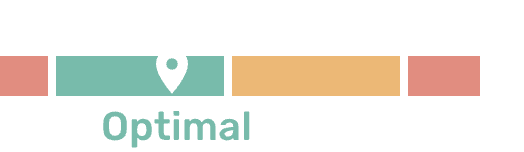
Orange: The hospital stay is acceptable. It complies with both the lower and upper thresholds but exceeds the ALOS threshold.

Red: The hospital stay is non-compliant. It is either below the lower threshold or above the upper threshold.
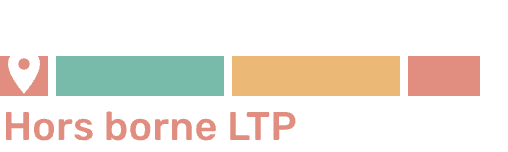

Hospital stay statuses
Integration of the three hospital stay scenarios into the infographic, based on the stay status:
- Current SwissDRG status
Calculation based on the current length of stay.
Actual admission date.
Current day of care. - Actual SwissDRG status
Calculation based on the effective length of stay.
Actual admission date.
Actual discharge date. - Planned SwissDRG status
Theoretical projection for patients not yet admitted.
Planned admission date.
Planned discharge date.
Benefits for healthcare institutions
Thanks to this integration, electronic patient records provide greater transparency and more accurate cost control, while fully complying with SwissDRG rules. This helps to:
- Reduce the number of excessively long or insufficient hospital stays.
- Raise awareness among medical teams regarding optimal length-of-stay thresholds.
- Optimize resource utilization while ensuring high-quality patient care.
ClevEHR enables healthcare institutions to achieve optimized hospital management by combining connectivity with strict compliance with the SwissDRG framework.
Towards optimized hospital management with SwissDRG and ClevEHR
The SwissDRG system is a cornerstone of hospital financing in Switzerland. With electronic patient record solutions such as ClevEHR, healthcare institutions can not only integrate this system but also fully leverage its benefits. By relying on accurate digital patient record management and intuitive infographics, ClevEHR facilitates monitoring and control of hospital costs. In a constantly evolving healthcare environment, this approach strengthens quality of care while optimizing resources.